
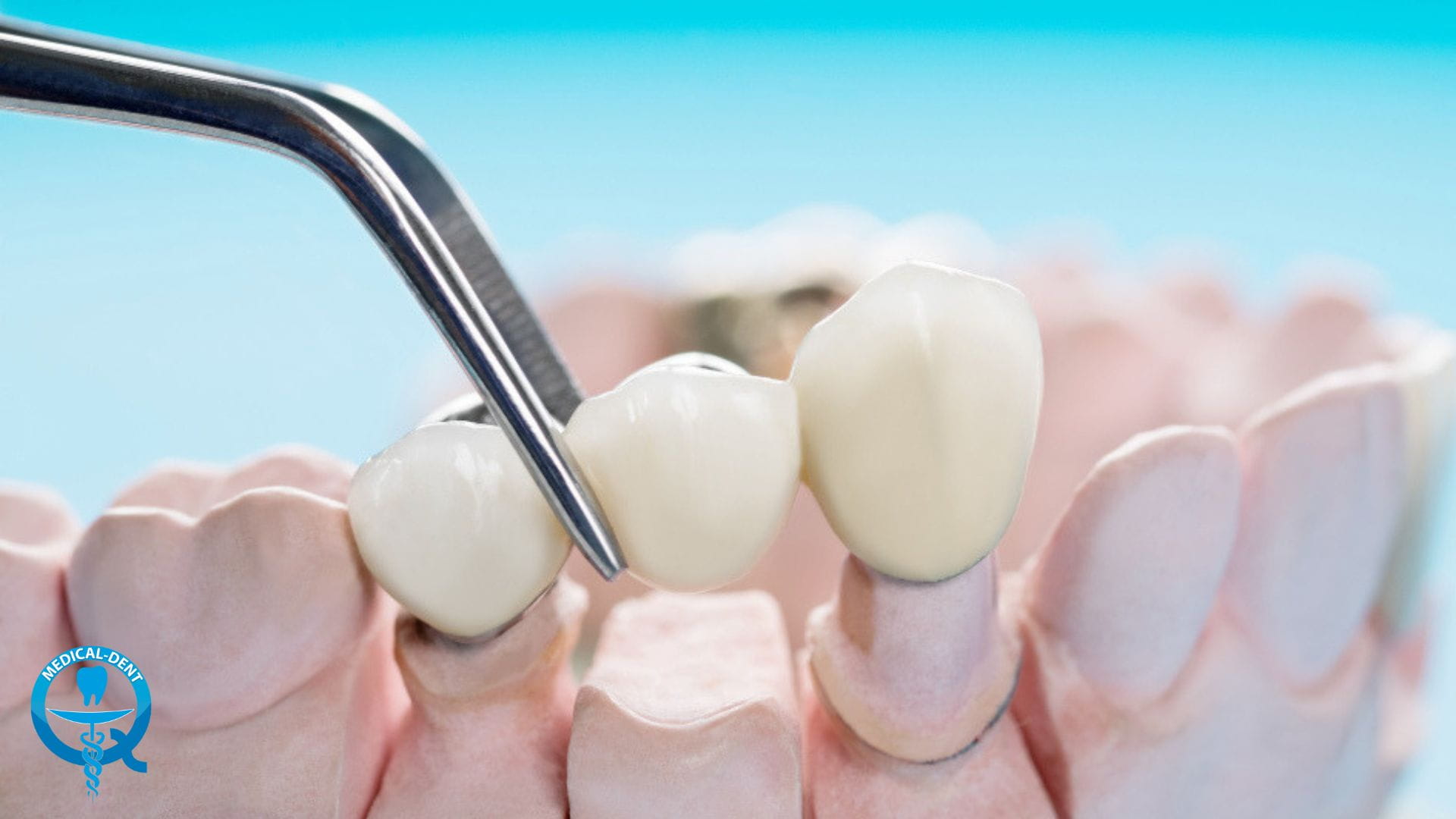
A porcelain bridge is a fixed prosthetic restoration used to replace one or more missing teeth. It restores the natural appearance of your smile and enables you to chew properly again, without the need for removable dentures. But how much does a porcelain bridge cost, what does the procedure involve, and what other options are there? Read our article to find out more.
Who is the porcelain bridge for, and what happens if you don’t fill the gap?
A porcelain bridge is the right choice for you if you are missing one or more adjacent teeth. It is most commonly used when the teeth on either side of the gap are healthy and can support the bridge. It is a good solution if you do not want implants or are not suitable for surgical treatment.
“The loss of one or more teeth has far more serious consequences than just aesthetic ones” – says Kamila Szuberska, a dentist at Medical-Dent. “The adjacent teeth shift towards the gap and lose their correct alignment. Over time, this leads to excessive strain, which affects the entire masticatory system, causing muscle tension, tooth wear and pain in the temporomandibular joints. Oral hygiene also deteriorates, increasing the risk of tooth decay and inflammation. This is why filling the gap left by a missing tooth is essential.”.
However, a dental bridge is not the only option. You can read more about this, as well as the associated costs, in our article “How much does it cost to have a tooth inserted in the UK? In short, other options include: an implant, a removable denture or orthodontic treatment to close the gap. However, the choice depends on your clinical situation and the condition of your mouth.
Getting back to the subject...
What does a porcelain bridge look like and what are its characteristics?
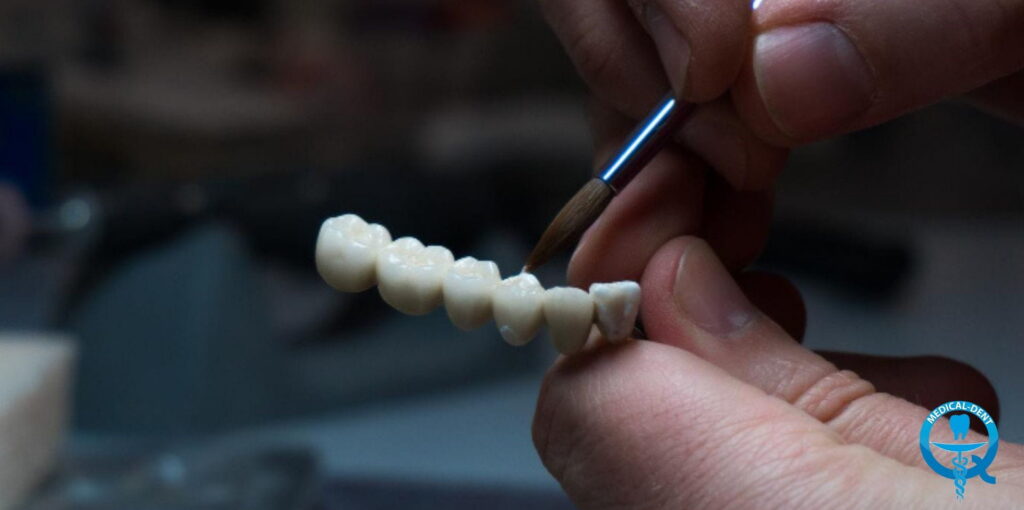
A porcelain bridge consists of crowns fitted onto the abutment teeth and a pontic, which replaces the missing tooth. The entire structure is permanently cemented in place, so you cannot remove it yourself, and it is completely stable.
Importantly, a porcelain bridge, also known as a ceramic bridge, It is characterised by its high aesthetic quality and excellent resemblance to a natural tooth. Porcelain is able to mimic enamel, which is why it reflects light in a similar way to your natural teeth. As a result, the bridge blends in well with your smile and is not noticeable, even up close. The material is biocompatible, meaning it is well tolerated by the gums. Furthermore, its smooth surface makes it easier to maintain good oral hygiene and reduces the build-up of bacterial plaque.
As well as ceramic bridges, there are other options available, such as zirconia bridges or porcelain-fused-to-metal bridges. The former are very durable and work well in the posterior regions, where the greatest chewing forces are exerted, but they may be less aesthetically pleasing at the smile line. The latter combine high durability, but are less aesthetically pleasing due to their metal framework.

What does the procedure involve?
“Just like any other dental procedure, the fitting of a bridge begins with a diagnosis and assessment of the abutment teeth on which it will be fixed,“ explains Kamila Szuberska. ”The teeth are then ground down to prepare them for the prosthetic crowns. An impression is then taken or a digital scan is performed. Based on this, a dental technician fabricates the bridge in the laboratory, and you are fitted with a temporary bridge whilst the treatment is underway. After a fitting and any necessary adjustments, the bridge is permanently cemented in place.”.
The entire process of building a bridge usually takes from a few from a few days to around two weeks, depending on the laboratory and the complexity of the work. The preparation of the teeth and the taking of the impression usually take just one appointment, i.e. around 60–90 minutes.
IMPORTANT! You can still make changes during the fitting sessions. These may relate to the shape, colour or bite alignment, as the bridge must fit perfectly with the rest of your teeth. Once the bridge has been permanently cemented in place, the scope for changes is very limited and will require dental intervention.

The cost of a porcelain bridge and why it’s not worth putting off treatment
The cost of a porcelain bridge depends on the number of teeth being restored, the type of material and the dental practice. At our practice, it’s £500 per unit. If you’re worried about the cost right now – don’t worry, you can spread the cost of the entire treatment over instalments. Importantly, the first 12 months are interest-free and our scheme is regulated by Financial Conduct Authority (FCA number 619628).
Finally, we’d like to remind you – it’s not worth putting off treatment, as a gap between your teeth can alter your entire bite. The teeth shift and lose their stable contact points. This leads to excessive strain, which can damage other teeth. Over time, treatment becomes more complicated and expensive.
As the dentist points out: „The sooner you replace a missing tooth, the easier and more predictable the prosthetic treatment will be.”