

You can have fresh teeth in the morning and still feel that something is wrong with your breath, and very often no single tooth is to blame. A layer of bacteria and plaque builds up on your tongue overnight, and a lack of tongue hygiene means that this process repeats itself daily and builds up, even if you brush your teeth very thoroughly. It doesn't just end with the smell, as the bacteria from this layer starts to affect the gums, the sensation of taste and the overall balance of the mouth.
What really happens on the tongue and why you don't see it
The tongue has a rough surface that traps bacteria and food debris in the micro-slits, where they create ideal conditions for growth. Saliva has a weaker effect at night, so in the morning the plaque is thicker and more visible, even if you don't feel the problem yet.
Interestingly, the tarnish on the tongue is not accidental, because its colour and texture change depending on diet, hydration and the amount of bacteria. White plaque indicates an accumulation of dead cells and microorganisms that have not been removed. Yellow or brown can indicate smoking, dehydration or an imbalance in the mouth. The tongue acts as an indicator of what is going on inside the body. Therefore, tongue hygiene also helps to spot problems earlier.
And what exactly is plaque on the tongue? It's a layer of deposit that builds up on its surface from a mixture of bacteria, dead cells, food debris and mucus. You see it most often in the morning, because saliva production decreases at night and the mouth cleans itself less well. As a result, bacteria have ideal conditions to multiply and form a clear, visible layer.
And it is on the tongue where a large proportion of the problems that people wrongly attribute to the teeth begin.

Lack of language hygiene and the consequences
The most common result is chronic bad breath. Most of the bacteria responsible for odour are located in the back of the tongue, where saliva has the least access. It is there that ideal conditions are created for anaerobic bacteria, which intensively produce unpleasant compounds. Even thorough tooth brushing does not remove this source of the problem, which can persist throughout the day. Mint or mouthwash then only have a temporary effect.
There may be a visible A white or yellowish deposit. Such a deposit contains huge amounts of bacteria. It also often affects the perception of flavours.
That's not all, as a lack of tongue hygiene also has its more serious consequences.
When you don't clean your tongue regularly, bacteria begin to form a permanent layer of biofilm that adheres firmly to the surface of the tongue. This biofilm doesn't just stay on your tongue, but gradually affects your teeth and gums too. Over time, it increases the risk of inflammations and disrupts the natural balance of the oral cavity. This process does not hurt at first, so it is easy to ignore. Therefore, lack of tongue hygiene acts as a silent mechanism for a growing problem.
Long-term tarnish increases the risk of caries, gums become more sensitive and can react by bleeding, and sometimes chronic periodontal problems can develop. You can prevent all of this, and it's easy to do.
Tongue hygiene - how to do it well and what actually works
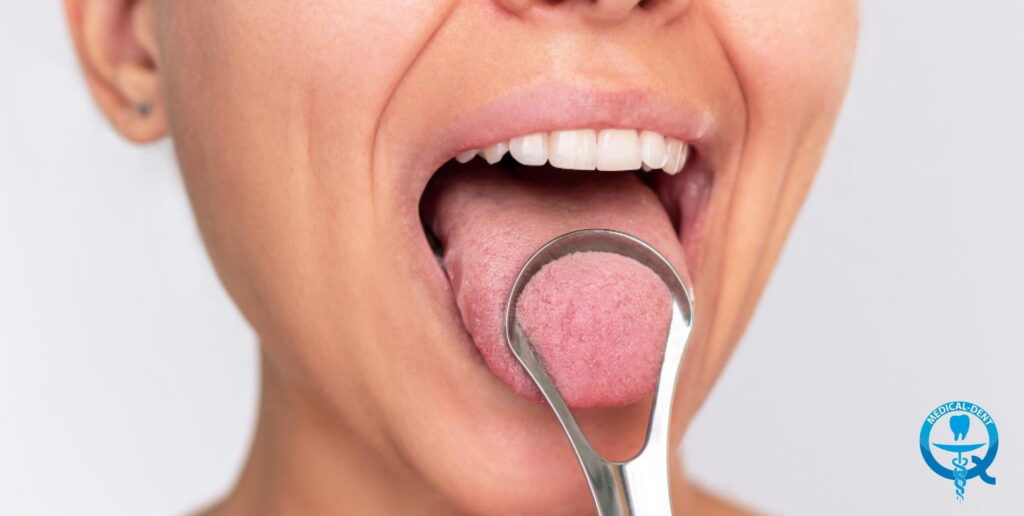
The tongue should be cleaned every morning and evening, together with tooth brushing. The movement should go from back to front to remove the build-up. You can use a toothbrush or a scraper, whichever is more comfortable for you. A scraper works more thoroughly, especially on the back of the tongue. Therefore, regular tongue hygiene has a better effect than occasional cleaning.
A toothbrush removes some of the tarnish, but often has only a superficial effect. The scraper removes the bacterial layer more mechanically and thoroughly. Therefore, it gives a more pronounced freshness effect. The choice of tool is not as important as the regularity of its use. The most important thing is to make tongue hygiene a daily habit.
Mouthwashes can support the process, but do not replace mechanical cleaning. They only work on the surface and do not remove biofilm. The best results come from a combination of both methods. Regularity is more important than intensity.
IMPORTANT: Excessive cleaning may irritate the tongue and does not improve the effect. Gentle pressure is enough to remove the tarnish. The tongue is sensitive and does not require force. Technique matters more than intensity.

Prevention that really works every day
Regular tongue hygiene has a direct effect on the freshness of the breath. It reduces the bacteria responsible for the smell. In combination with brushing and flossing allow you to take care of your oral health. Remember, however, that this is not everything.
Follow-up visits to the dentist help monitor the condition of the cavity mouth and detect problems earlier. This way, you do not expose yourself to the pain and greater expense of specialist treatment. One visit every six months is sufficient. If your last one was much earlier, be sure to make an appointment with your dentist.
Finally, one more point. Hydration of the body directly affects the tongue and the amount of plaque. Dehydration promotes bacteria and worsens its appearance. Drinking water supports the natural cleansing of the mouth. It is a simple part of daily prevention that supports all other measures.