
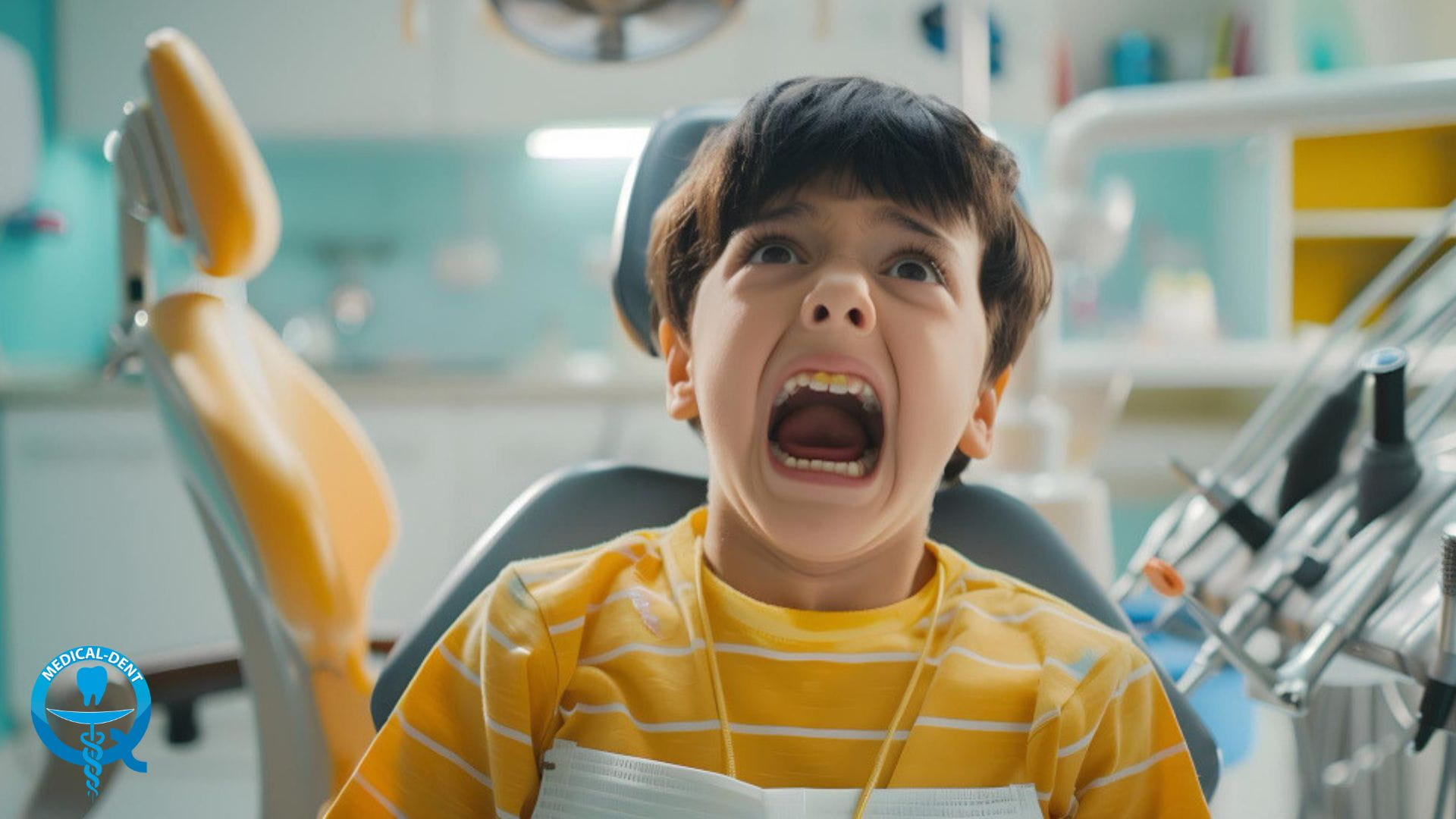
Children’s fear of visiting the dentist’s surgery is one of the most common challenges in paediatric dentistry, but it is also a problem for many parents. A particularly difficult situation arises when a child is terrified of the dentist – refusing to enter the surgery, reacting with crying, or even experiencing severe physiological stress. This state of mind not only makes treatment difficult, but may also affect their oral health in the future. So what can be done?
Why does a child feel such intense fear of treatment?
In many cases, a child is afraid of the dentist because of previous negative experiences they have had with dental treatment. It is often about pain, but the reason may also be sensory overload – the light from the lamp, the sound of the drill or the smell of the materials used in the surgery. Furthermore, a lack of control over the situation intensifies the stress response and triggers the „fight-or-flight” response.
It may be that you start to feel anxious even before your first visit. A child forms an impression of the doctor’s surgery based on stories they have heard from adults, peers or the media. Even neutral information can be interpreted by their nervous system as a threat.
„If a child is terrified of the dentist, this triggers the limbic system, which is responsible for the fear response. In such a situation, logical explanations don’t work. The key is to gradually build a sense of security and predictability,” explains dentist Kamila Szuberska from Medical-Dent.

So what can you do if your child is terrified of the dentist?
Preparation at home plays the most important role. As a parent, you should act as an „emotional safe haven”, helping to manage anxiety and shaping your child’s attitude towards the visit.
Firstly, you need to pay attention to how you communicate. Avoid words such as „don’t be afraid, it won’t hurt„, ”drill„ or ”injection’, as they heighten anxiety even when the intention is to reassure.
What else might help a toddler?
- a neutral and calm way of presenting the visit („we’ll have a look at your teeth”),
- educational games involving role-play as a dentist,
- reading books that introduce the subject of dentistry,
- avoiding one’s own negative experiences,
- helping the child develop a sense of control („you can stop at any time”).
If a child is afraid of the dentist and of visits to the surgery, putting pressure on them, forcing them or making them feel ashamed will only exacerbate their anxiety and perpetuate the problem.
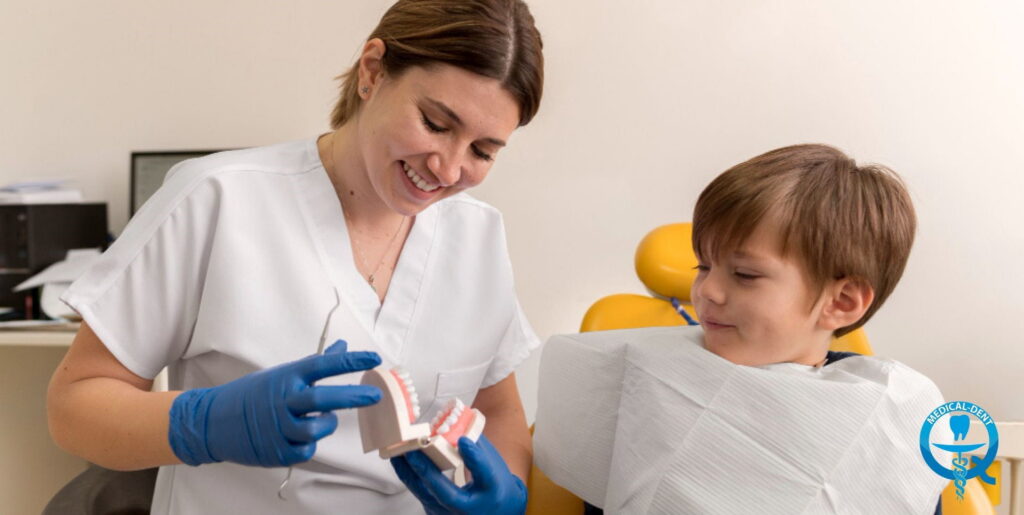
What does a visit involve, and why does the way it is conducted matter?
When a child is terrified of the dentist, it is not just the visit itself that is crucial, but also the planning stage. It is worth phoning the surgery in advance and asking for a brief chat with the dentist or the staff. This is an opportunity for the parent to explain the situation and find out what approach the dentist takes to working with anxious children. Such a conversation allows you to assess whether the practice adopts an adaptive approach or follows a standard treatment model.
It is best to book an appointment when your child is not in pain, This is very helpful in building trust and overcoming fear. However, it often happens – especially when a child has a terrible fear of the dentist – that parents put off a check-up, and the child ends up at the dentist’s with severe pain.
The first visit is designed to familiarise the child with the surgery, the dentist and to carry out an oral examination. You can read more about this in our article Your child's first visit to the dentist in the UK".
In the second case, the situation is more complicated. Most often, the first few minutes in the surgery are spent calming the child down and assessing whether it is even possible to begin any treatment at all. The doctor may proceed in stages: first a brief examination, then, if necessary, immediate pain relief, and only then a treatment plan. Only when the child’s anxiety begins to subside do they move on to the next steps.
“In many cases, treatment is spread over several appointments, as a single, comprehensive treatment session would be too much of a burden for a child experiencing severe pain and anxiety,“ says Dr Kamila Szuberska. ”Thanks to this approach, it is possible to gradually rebuild a sense of security and avoid exacerbating the trauma associated with treatment.”.
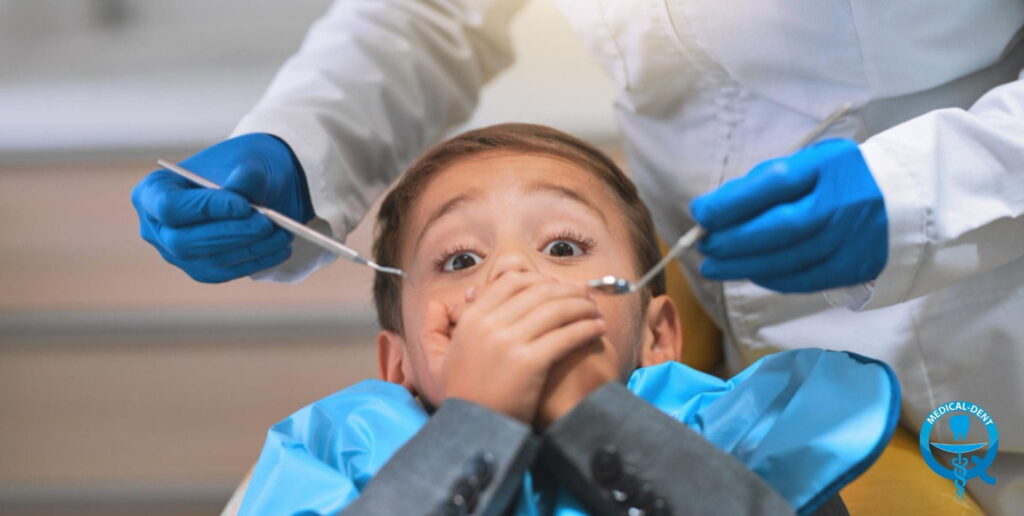
A child is terrified of the dentist – advanced support methods
In more difficult cases, supportive methods are used to reduce anxiety and enable treatment.
The most commonly used ones include:
- inhalation sedation (laughing gas), which reduces anxiety and improves cooperation,
- distraction techniques (music, narration, screens),
- working with a child psychologist,
- gradually getting the child used to the sounds, smells and equipment used in the dentist’s surgery
„If a child is terrified of the dentist, it is crucial It is not just about carrying out the procedure, but about changing the way a child’s brain interprets the visit. It is a therapeutic process, not a one-off action,“ explains the dentist. ”This is hugely important, because habits and emotions formed in childhood very often carry over into adult life – including in the context of regular dental check-ups. Healthy teeth mean a healthy body, and avoiding treatment due to fear can lead to serious consequences in the future, including premature tooth loss and the need to wear dentures at a young age.”.

How can we create positive experiences for the future?
The most important thing is to prevent a negative pattern from becoming ingrained. If a child is terrified of the dentist, the priority should be to create a positive association with the dentist’s surgery.
An early familiarisation visit plays a key role – ideally before any treatment is required. Dr Kamila Szuberska recommends starting to familiarise children with the dentist’s surgery from a very early age, practically as soon as their first milk teeth appear.Thanks to this early familiarisation, the child gets to know the dental environment in a safe setting and without any pressure.
And if your child is afraid of the dentist – most importantly – don’t put off the appointment „until the fear has passed”. Once pain sets in or you suspect there are problems with their teeth, the stress may be even greater. That’s why, if your little one is afraid of the dentist, it’s best to consult a dentist as early as possible, discuss the issue when booking the appointment, and start preparing your child for treatment even before they enter the surgery.
And if you’re looking for a dentist who can help your child overcome their fear and ensure they have a healthy, beautiful smile – make yourself known to us.