
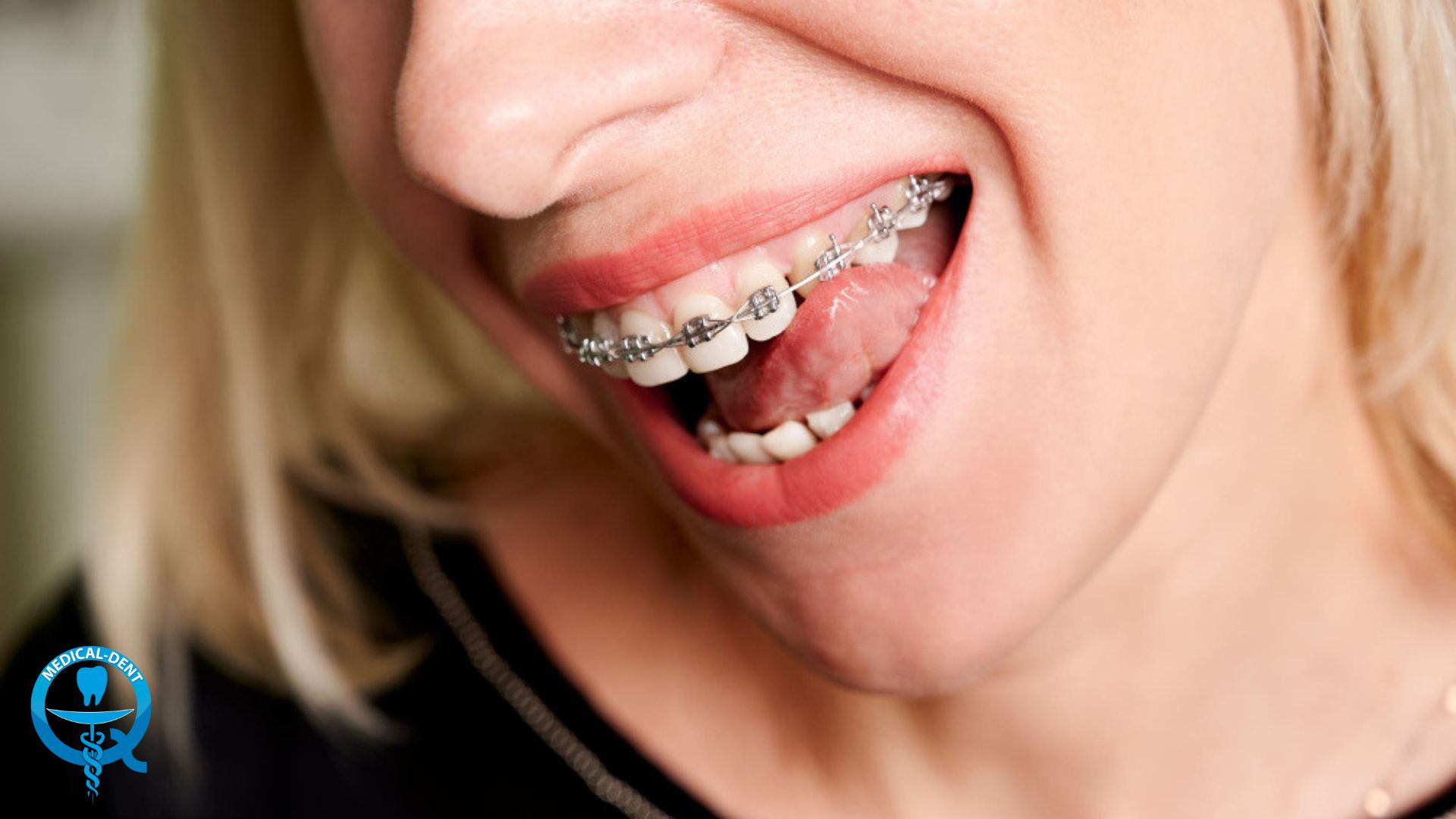
Metal braces remain the most popular method of straightening teeth in the UK. They deliver predictable results and are effective even in cases of complex malocclusions. The treatment works continuously, as it exerts a controlled force on the teeth around the clock, which triggers the process of bone remodelling in the jaw. What’s more, it is cheaper than other fixed orthodontic braces.
Who are metal braces for, and what happens if you put off treatment?
Metal braces are used when effective treatment is required for malocclusion, crowded teeth, misaligned teeth or other conditions requiring precise control over tooth movement. And if you’re struggling with malocclusion, we recommend our article “Malocclusion in adults - causes, consequences and treatment".
As our orthodontist Bogdan Gofron points out: “Many people believe that teeth simply “sit” in the bone. In reality, they are in constant motion throughout a person’s life and react to the forces exerted when biting, swallowing or even clenching the jaws. When there is a lack of space in the dental arch, the body does not halt these processes, but instead seeks space wherever it can find it. That is why slight crowding, which today seems to be merely an aesthetic issue, may look completely different in a few years” time. This is precisely why, in orthodontics, it is so important not only to assess the current alignment of the teeth, but also to predict how the bite will change in the future.”.
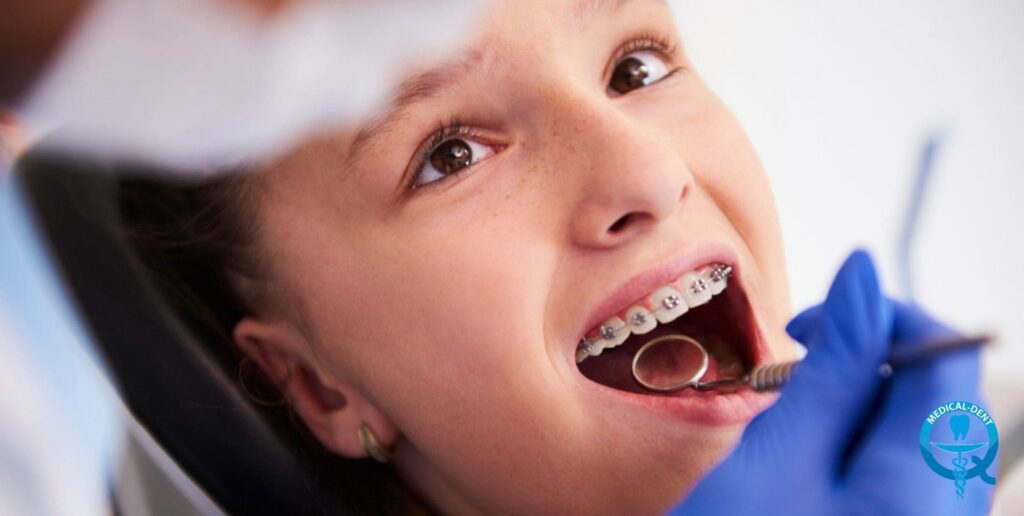
This is very important because untreated malocclusions can affect not only the alignment of the teeth, but also the health of the entire mouth. Crooked teeth are harder to clean thoroughly, which is why bacterial plaque and tartar tend to build up on them more easily. This increases the risk of tooth decay and gum inflammation.
In more severe cases, this may lead to overloading of individual teeth, excessive wear and even gradual loosening. An untreated malocclusion can also affect the functioning of the temporomandibular joints. This causes tension in the facial muscles, clicking sounds when opening the mouth and recurrent headaches. The longer the problem remains untreated, the greater the risk that the condition will gradually worsen.
Getting back to the camera…
How do metal braces work, what does the treatment involve, and how long does it take?
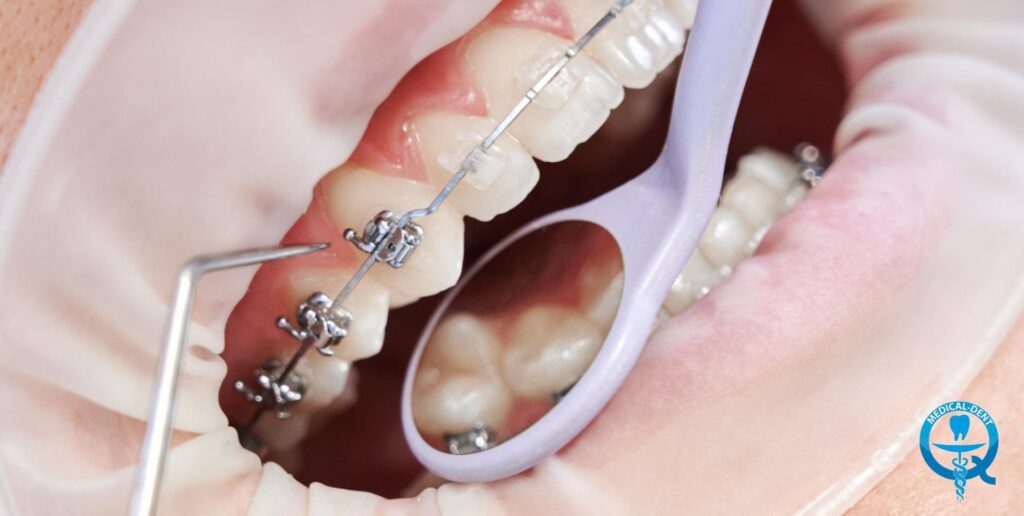
Metal braces work by applying a constant force via the orthodontic archwire and brackets, which are bonded to the teeth. This force triggers bone remodelling around the roots, allowing the teeth to move in a controlled manner.
You start treatment with a diagnosis, scans and an analysis of your bite, which is used to plan every movement of your teeth. The braces are then fitted and activated, and you return for regular check-ups every few weeks. Each visit allows the forces to be monitored and the direction of the braces’ movement to be adjusted.
Check-ups are crucial, as any change in the dental arch affects the entire balance of forces within the mouth. If these check-ups are missed, the teeth may move more slowly, unevenly or in an unplanned direction. A lack of regular appointments can lead to treatment taking longer, a loss of some of the results, and even the need to reverse certain stages in order to regain control over the bite.
What other types of braces are there?
As well as metal braces, there are other options available. Ceramic braces work in the same way as metal ones, but have tooth-coloured brackets, making them less noticeable. They are more aesthetically pleasing, but more prone to staining and require greater care with your diet and oral hygiene.
The sapphire lens is a more transparent version, where the clasps are made of a crystalline material. This produces a very natural-looking effect, but it is more delicate and, in difficult cases, may have limitations in terms of force control.
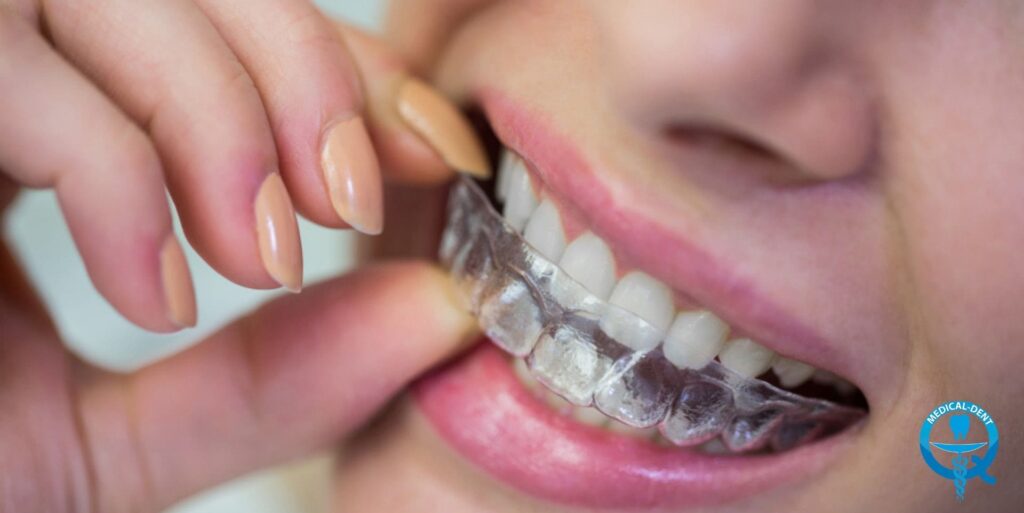
Orthodontic aligners They work in a completely different way, as you take them off to eat and for personal hygiene. They’re very comfortable, but they require a great deal of discipline, as you have to wear them for most of the day for the treatment to be effective.
You can find detailed information about the cameras in our article “Types of braces in the UK - which to choose?".
„The choice of camera depends not only on aesthetics, but on the biomechanics of your bite, the severity of the problem and your cooperation during treatment. A patient who works long hours and often eats out may be better suited to a different system than someone who has full control over wearing their braces. On the other hand, the dentist must assess whether a particular set of braces will provide sufficient control over tooth movement in a specific case.” – emphasises the orthodontist.
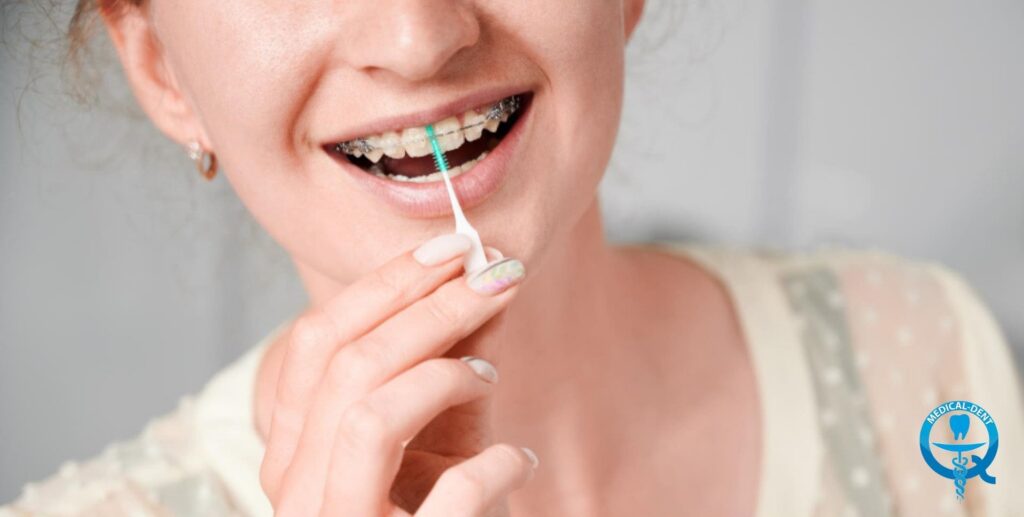
What is it like to live with braces, and how should you look after them?
The first few days with braces are a settling-in period, which usually lasts from a few days to two weeks. During this time, you may experience some pressure, increased tooth sensitivity and slight irritation on the inside of your cheeks. In practice, a soft diet, orthodontic wax and thorough but gentle oral hygiene help.
The biggest challenge isn’t the pain, but maintaining a consistent hygiene routine. If you don’t maintain it, problems arise that go beyond mere aesthetics. First and foremost, this involves the build-up of plaque around the brackets and in the spaces between the teeth. Over time, this can lead to gum inflammation, bleeding and demineralisation of the enamel – that is, white spots around the braces. In more advanced cases, tooth decay and weakening of the enamel structure occur, which can persist even after the braces have been removed.
And you can find details on how to look after your dentures and teeth in our article with a similar title, “How do I look after my teeth with braces?".
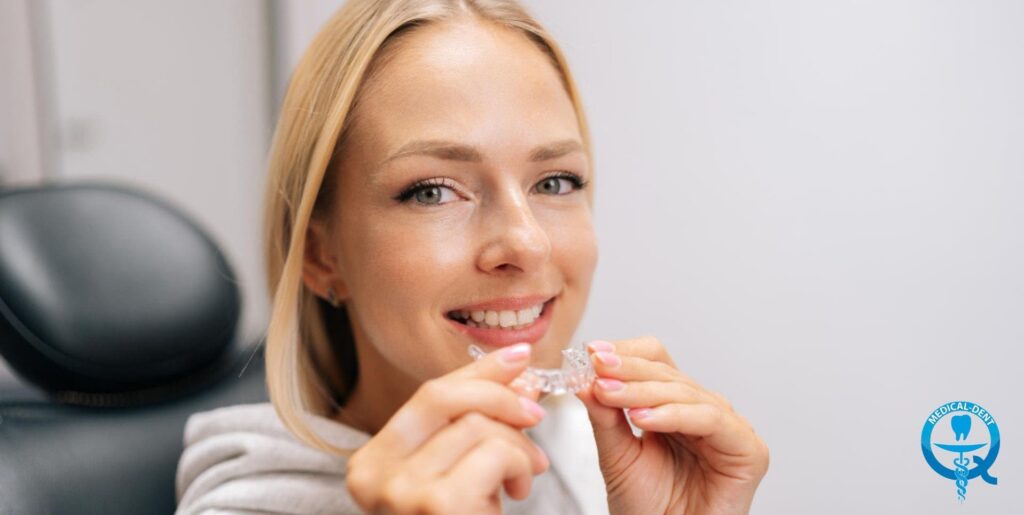
What happens after metal braces are removed, and why retention is crucial
Once the braces have been removed, your teeth are already in their new position, but the tissues surrounding them are still undergoing remodelling. The bone and ligaments need time to stabilise the new alignment and „accept” the changed bite.
As orthodontist Bogdan Gofron explains: „Retention is not an afterthought, but an integral part of treatment. Teeth have a natural biological memory and, without maintenance, they will revert to their previous position.”
Retention It can be fixed, bonded to the inner surface of the teeth, or removable, in the form of aligners worn mainly at night. In many cases, it is used for many years, as bite stabilisation is a long-term process. Failure to wear a retainer, or wearing it irregularly, increases the risk of the problem recurring, even after successful treatment.

How much do metal braces cost in the UK, and why should you be careful about getting treatment in Poland?
The cost of metal braces in the UK ranges from £700 to £1,500. Although you can find cheaper options in Poland, particularly in smaller towns, this isn’t always the best choice if you live in the UK permanently.
As an orthodontist who works with patients points out international: „The most important factor in orthodontics is not the price, but the continuity of treatment. If a patient does not have a regular dentist or attend regular check-ups, we lose control over the forces acting on the teeth, and this can prolong treatment or compromise the stability of the results.”
Therefore, if you live in the UK, starting treatment locally offers you the greatest predictability, consistent monitoring and a lower risk of interruptions to your treatment.
The price of metal braces at our practice For dental treatment, prices start at £800 and you can pay in instalments. Importantly, the first 12 instalments are interest-free, and our system is fully secure and regulated by Financial Conduct Authority (FCA number 619628). You can read more about this in our article “Instalment braces" or contact us.