

Crooked milk teeth can be a cause for concern for any parent. When the first tooth comes through at an unusual angle, the question immediately arises: is everything alright? Find out why milk teeth can grow crookedly and when their appearance should prompt you to visit the dentist.
Is it normal for milk teeth to be crooked?
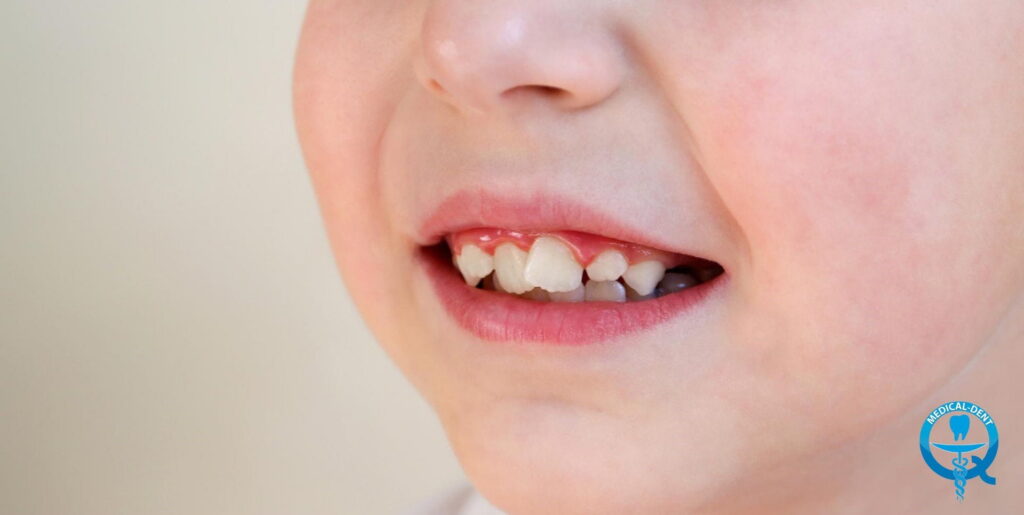
Yes. It does happen that milk teeth grow in different directions – that is, they may be slightly rotated, misaligned or growing at an angle. Sometimes this is simply due to the structure of the jaw and the amount of space the child has at that particular stage.
The order in which the teeth erupt is also very important. A new tooth may appear next to a tooth that has not yet moved into its final position. This is why the alignment of the milk teeth may look rather unusual for a while. Later on, the situation may change as more teeth come through.
IMPORTANT! Certain childhood habits can also affect the appearance of teeth. Prolonged thumb-sucking, pacifier use or lip-biting can alter the way the teeth fit together. Over time, this can also affect the alignment of the teeth and the development of the jaws.
When should crooked milk teeth cause you concern?
If the teeth are only slightly misaligned, you shouldn’t automatically assume that treatment will be necessary. At this age, the jaw is still growing, and the teeth may gradually shift position. Therefore, crooked milk teeth do not always indicate a cause for concern.
Pay closer attention to any obvious problems with biting or difficulty closing the mouth. Overlapping teeth or very large gaps between them may also be a cause for concern. If you notice any of these symptoms, it’s a good idea to take your little one to the dentist.
The dentist will check whether your child’s teeth are developing properly and whether their alignment is appropriate for their age. This will help you decide whether simply monitoring the situation is sufficient, or whether it would be better to consult an orthodontist.

Do crooked milk teeth need to be straightened?
The fact that a tooth is crooked does not necessarily mean it needs to be straightened. The main purpose of milk teeth is to maintain space for the permanent teeth and to help the child chew properly. Therefore, if crooked milk teeth do not interfere with these functions, an orthodontist may decide that straightening them would not benefit the child in any way.
The situation may be different when a milk tooth is misaligned hinders the proper development of the bite. In such cases, the dentist may decide to take early action rather than wait for the teeth to fall out naturally. Depending on the problem, they may fit braces, a space maintainer or another solution appropriate to the child’s age.
So it’s not about every milk tooth being perfectly straight. The most important thing is to ensure the right conditions for the permanent teeth that are still developing. And if you’d like to find out more about malocclusion, we recommend our article „Malocclusion in children - causes, consequences and treatment„.

And how should you look after your baby teeth, especially if they’re crooked?
Crooked teeth can be more difficult to clean thoroughly. Food debris and bacterial plaque are more likely to get trapped between crowded milk teeth. That is precisely why it is worth paying particular attention to daily oral hygiene. And if your little one is reluctant to brush their teeth, we recommend our article „10 ways to encourage your child to brush their teeth„.
We would like to remind you that milk teeth are thinner and less strong mineralised tissues than permanent teeth. Therefore, caries It can develop more quickly in these areas and reach the deeper layers of the tooth more easily. What is more, untreated tooth decay can increase the risk of problems with neighbouring teeth.
So make sure you help your child brush their teeth thoroughly twice a day fluoride toothpaste suitable for their age. If their teeth are tightly packed or overlap, ask your dentist whether your child should also use dental floss. Regular check-ups, meanwhile, allow you to spot the first signs of any changes quickly.
IMPORTANT! Don’t delay your appointment if you notice any white, brown or dark spots on the teeth. A prompt response can limit the progression of tooth decay and protect your child from pain and more extensive treatment. Remember, too, that healthy milk teeth help maintain the right conditions for the permanent teeth.
To sum up, crooked milk teeth do not always require treatment, but it is always worth keeping an eye on them and looking after them properly. If you have any concerns, take your child to see a dentist rather than waiting for the problem to go away on its own.