

Milk teeth, although temporary, play a hugely important role in a child's development. They help with chewing and speaking properly and also hold space for permanent teeth. Many people underestimate the treatment of milk teeth, thinking that „they will fall out anyway”. However, neglect can lead to pain, inflammation and problems with eruption of permanent teeth. One of the common procedures performed in the surgery is the application of a dressing on a milk tooth - and this is what we will talk about today.
Why is a dressing placed on a milk tooth?
A dressing is placed on a deciduous tooth in situations where the tooth requires treatment but the process cannot be completed in one visit. This may be due to:
- deep caries,
- pulp inflammation,
- the need to observe how the tooth responds to treatment,
- or when the child is no longer able to cooperate in the chair (which is often the case on first visits).
The dentist shall then secure the tooth with a special temporary material - this is the dressing on the milk tooth. It protects the tooth from bacteria and trauma, relieves pain and allows the treatment to be completed at a later date.
And you can read more about the treatment of millipedes in our article “Treatment of deciduous teeth".
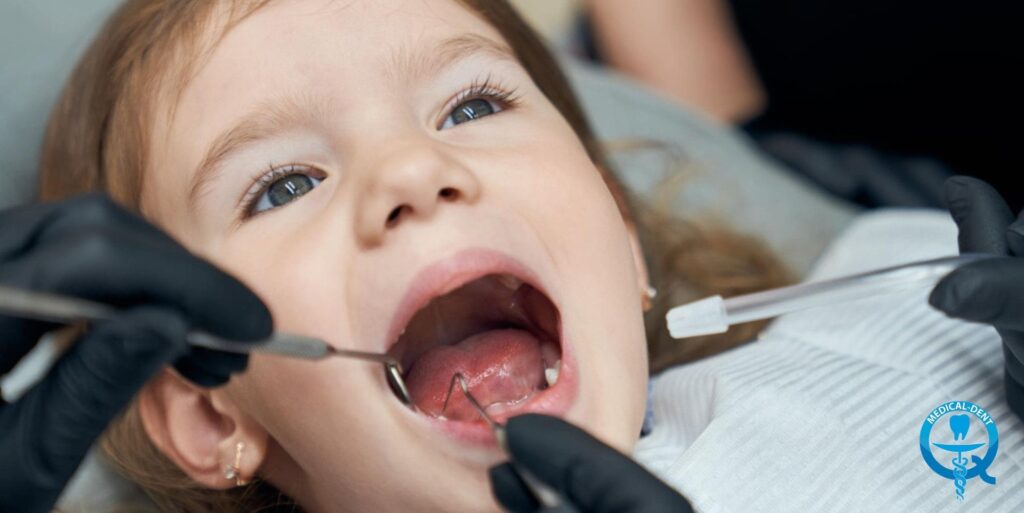
What does it look like to place a dressing on a milk tooth?
The procedure is quick, safe and painless. The doctor cleans the tooth of decay, applies the medicine inside the chamber or to the pulp, and then secures everything with a temporary material.
Many parents are surprised, that such a simple procedure can bring immediate relief to the child. A dressing on a deciduous tooth is often used after pulp treatment or when the tooth requires observation before the final filling is placed.
Can the dressing on a milk tooth peel off on its own?
Yes, it happens - especially if your child eats hard foods or frequently „tinkers” with the treated tooth with their tongue. A bandage is a temporary material, so it is not as permanent as a filling.
If the dressing on a milk tooth falls off, it is not worth waiting - you need to visit the surgery as soon as possible to re-secure the tooth. An open tooth interior is an open door for bacteria and infection.
Usually, the dressing on the deciduous tooth remains for a few days to a few weeks - depending on the type of treatment. If everything goes well, a permanent filling is placed at the next visit.
Sometimes, however, when treatment is staged (e.g. with root canal treatment of a deciduous tooth), the dressing can be changed several times.
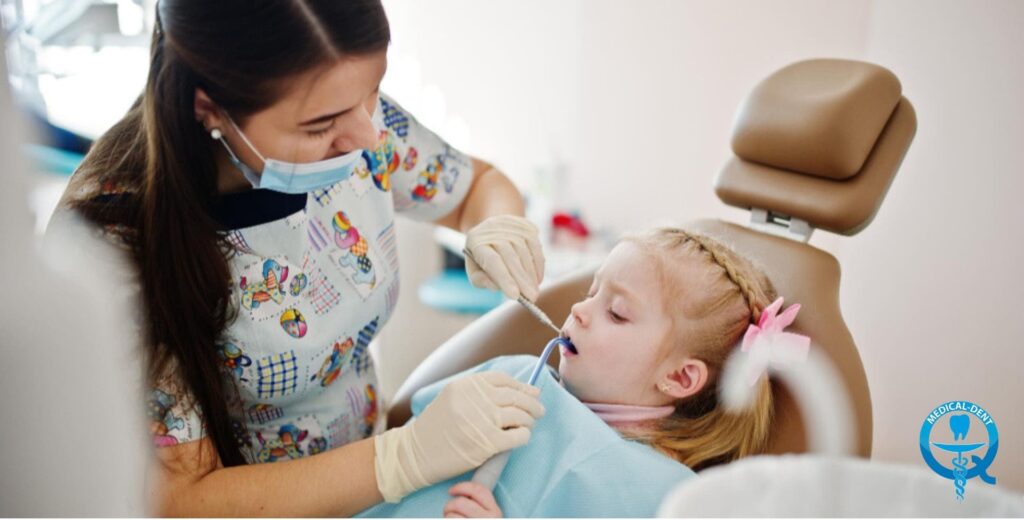
What can parents do?
Parents have a huge role in the success of treatment. Once a dressing has been placed on a milk tooth, it is worthwhile:
- avoid hard and sticky foods (e.g. toffees, nuts, chewing gum),
- remind the child not to touch the tooth with his tongue,
- keep an eye on hygiene - gentle brushing is still necessary,
- observe if the child complains of pain or swelling.
And as always, prevention is better than cure. Untreated deciduous teeth can lead to serious problems: infection, damage to the permanent tooth buds and even asymmetry in the development of the jaw. This is why it is important to take any treatment - even temporary ones - seriously.