
Manual or electric - which toothbrush for a child really works better? This is an important question, but not the only one. By the way, you should also know when to start caring for your child's teeth, how to choose the right toothpaste, when to make the first appointment and what to do if problems have already arisen.
Why should a child's teeth be cared for from the start?
Oral hygiene should be looked after from the moment the first tooth appears. This is very important because it is not only about avoiding the pain that a baby may experience, but also about avoiding dental problems in the future. The earlier you start, the easier it is to build up a good habit.
Many parents still hear that the millipedes will fall out after all, so you don't have to worry about them very much. This is one of the most costly myths. And you can read more about it in our article „Treatment of deciduous teeth - does it make sense?„.
Problems with milkmaids also affect the bite and development of permanent teeth. When a child loses a tooth too early, other teeth can start to shift. This later increases the risk of malocclusion and long orthodontic treatment.
On top of that, there is also stress, intervention visits and more expense. The later you react, the more complicated and more expensive the treatment gets. Taking care of the teeth from the beginning is simply a relief for your child and for your wallet.
How do you look after your child's teeth on a daily basis?
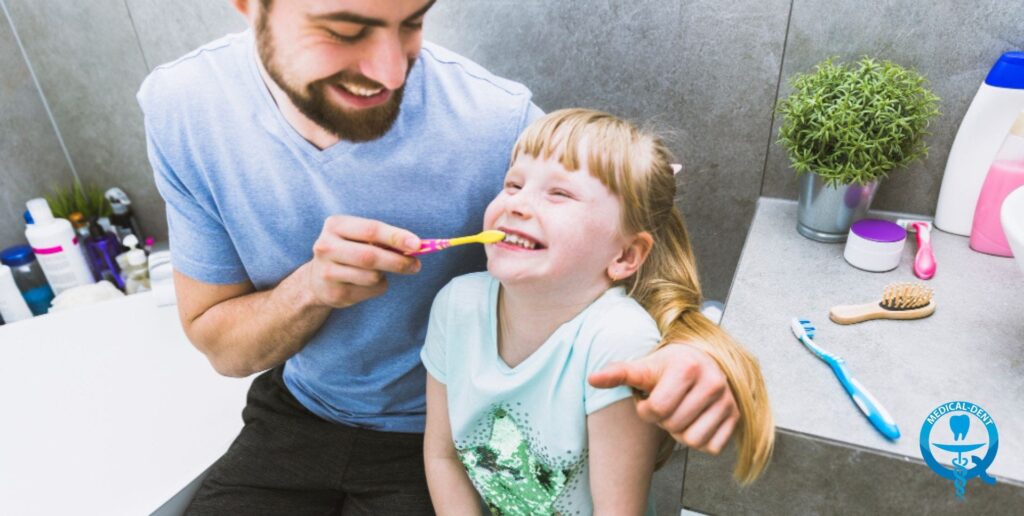
Regularity is fundamental. Your child's teeth need to be brushed twice a day, preferably in the morning and in the evening. Even the best toothbrush for a child will not help if brushing is haphazard.
For a long time, the child does not cope with thorough brushing yourself. Your help is therefore crucial here. First you brush together and then you still brush your teeth. But what if your toddler does not want to brush his teeth? We wrote about how to deal with this in the article „10 ways to encourage your child to brush their teeth„.
Diet is also important. Frequent snacking, sugary drinks and falling asleep after milk or juice in the evening greatly increase the risk of tooth decay. Teeth do not like constant contact with sugar.
It is also a good idea to watch the baby's breathing, bites and closes the mouth. Certain habits, such as mouth breathing or finger sucking, can affect the development of occlusion. The sooner you catch this, the better.
And back to the topic - what is the best toothbrush for a child?
How do I choose my child's toothbrush and toothpaste?
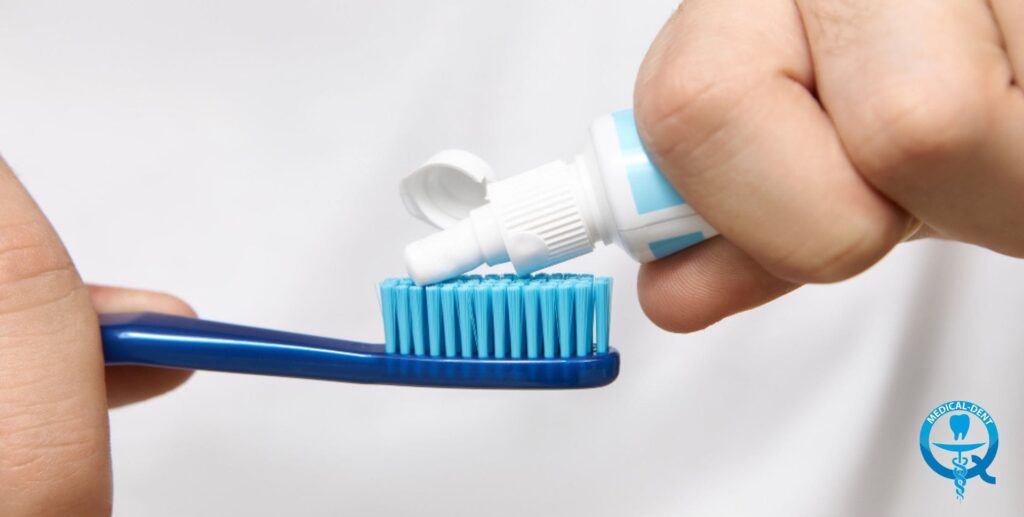
A good toothbrush for your child It should have a small head, soft bristles and a comfortable grip. It must not be too big or too hard. It is the effectiveness that counts, but also the comfort of the little patient. It is therefore advisable to choose an age-appropriate model. A different toothbrush for a child will work for a one-year-old and a different one for a preschooler.
Clearly, for many toddlers, appearance also matters. A colourful toothbrush for your child with a favourite motif often really helps. Sometimes such a detail turns a daily struggle into something much easier.
Remember, too, that the toothpaste must suit the age of the child. The most important thing is the right amount of fluoride, as this is what promotes protection against decay. Don't choose a toothpaste just because it smells good or has a trendy label.
Electric or manual toothbrush for a child - which is better?
This is one of the most common questions parents ask. The simple truth is that the more expensive option does not always win out. Best toothbrush for your child is one that can be used effectively and regularly.
The manual toothbrush works great, if your child cooperates and you carefully control the washing. This is simple, effective and often fully sufficient. Especially when the technique is good.
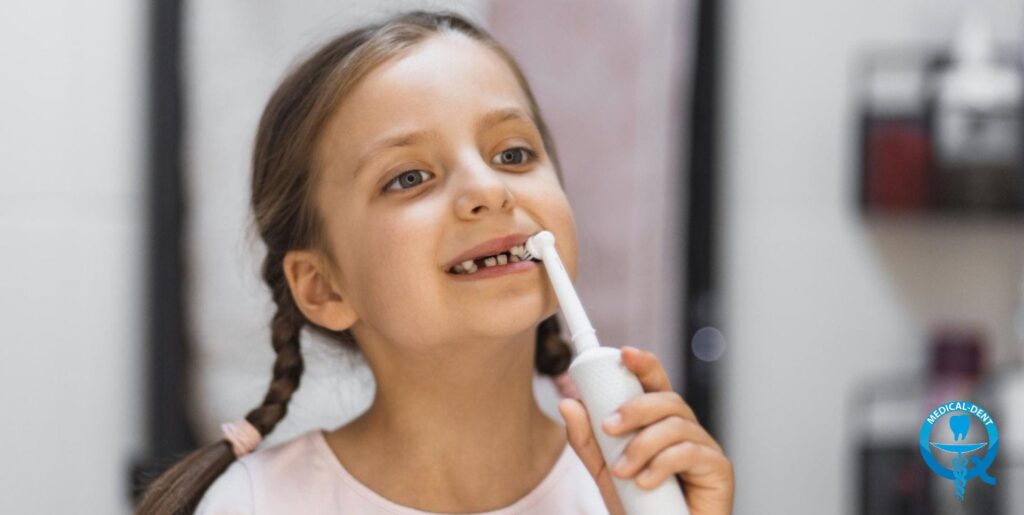
An electric one can be helpful when a child is reluctant to brush their teeth or does so too briefly. For some toddlers it is simply more interesting. Then a toothbrush for your child in the electric version can increase regularity.
When choosing an electric model, pay attention attention to the gentle mode, soft tip and size of the head. The device must not be heavy or too intense. The child should feel comfortable with it, not struggle with it every evening.
Don't choose a toothbrush influenced by advertising. Observe what works for your child in practice. Sometimes a classic toothbrush for your child will give better results than the most advanced electric model.
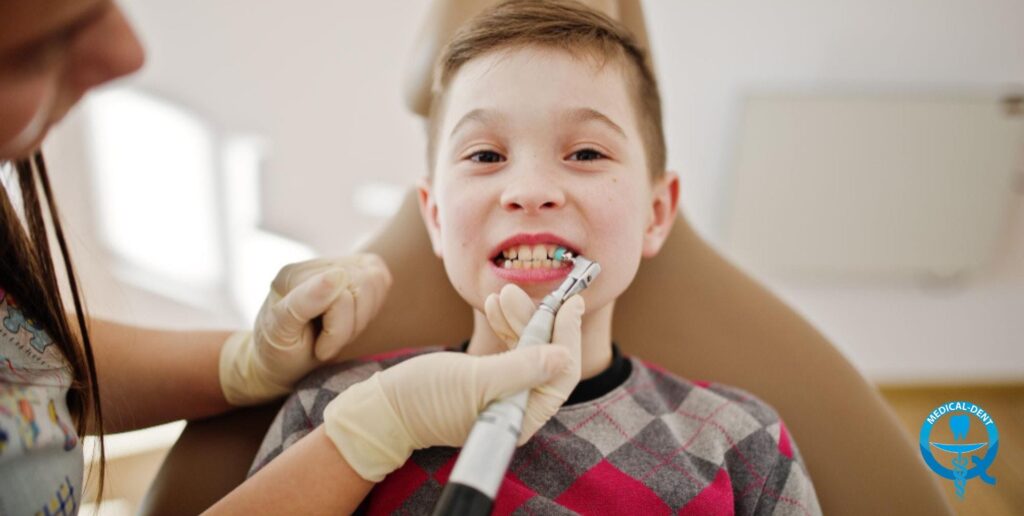
A child's toothbrush is not enough!
In addition to looking after your little one's oral hygiene, diet and healthy habits, don't forget regular visits to the dentist. The first visit should take place when the first tooth appears. This visit is primarily to familiarise the child with the surgery. This is important because first experiences stay with the child for a long time. If the surgery is not associated with pain, it is easier to avoid the fear of the dentist. And this then makes it very easy to take care of the teeth for years to come. You can read more about the adaptation visit in our article „Your child's first visit to the dentist in the UK„.
Regular check-ups help catch problems before they get serious. The dentist can assess the development of the bite, the condition of the enamel and the first signs of decay. This gives the dentist a chance to react quickly and can thus save your little one pain.
Treatments that strengthen the protection of the teeth are also important in prevention. Depending on your needs, your dentist may suggest fluoridation or varnishing. These are simple measures that often help to avoid major problems. We wrote about them in the text „Preventive treatments for your child - or how to keep your little one's teeth healthy„.
What if it is already too late?
If you see cavities or your child complains of pain see a dentist as soon as possible. Millipedes need to be treated. A diseased milk tooth can hurt, make eating difficult, impair sleep and affect the development of permanent teeth. This is not a minor issue that will resolve itself.
Untreated problems can later lead to more difficult treatment, more stress and higher costs. Therefore, it is better to come sooner than only when your child cannot eat or is crying in pain. The sooner you react, the better the chance of a smoother treatment.